Check the back of your moisturiser. You know you want to. How many of those ingredients could you explain to a layperson?
We all pretty much stick to a skincare regimen daily, or twice a day for many of us, without really knowing what the heck is in the bottle. And that’s why people are increasingly opting for vegan skincare. They ask questions about the product they’re using on their skin, the source of the ingredients and if an animal was involved in any part of the production.
If you want to know more but feel a little inundated, this is your cheat sheet. We’re going to keep it really simple what it really means when you see the term vegan skincare, which ingredients you need to watch out for, as well as picking the best products for your skin, whether it’s dry, oily, sensitive or somewhere in the middle.
What Are Vegan Skincare Products, Exactly?
Vegan skincare products have no ingredients derived from animals. No animal fats, no insect based colours, no animal by products of agriculture or beekeeping.
Easy enough. But this is where people get tripped up: vegan and cruelty free aren’t the same thing.
- Vegan is a term that describes the food must only consist ingredients that are plant, mineral, or lab-based.
- Cruelty free: A finished product (and usually its ingredients) was not tested on animals, nor does the company that produces them test on animals.
A cream can be cruelty free, and still have beeswax in it. One can be entirely vegan, but the company producing that brand may have tested on animals. If they’re important to you, then the best bet is a product that checks whether box.
Animal Derived Ingredients Hiding in Everyday Skincare
You’d be surprised how often these show up. Once you know their names, you’ll start spotting them everywhere:
- Lanolin: a waxy substance taken from sheep’s wool, common in lip balms and rich creams.
- Beeswax: used to thicken balms, lipsticks and night creams.
- Honey: popular in masks and cleansers for its soothing reputation.
- Collagen: usually sourced from cows, pigs or fish, and often promised as an anti ageing boost.
- Carmine: a red pigment made from crushed insects, found in tinted products.
- Keratin: made from animal hair, hooves or feathers.
- Squalane (sometimes): it can come from shark liver, though plant versions made from olives or sugarcane are widely available.
- Tallow: rendered animal fat, which has become a trendy ingredient in some natural formulas.
If a label looks confusing, look for a vegan badge or certification on the packaging. Or simply check the ingredient list against the names above.
Are Vegan Skincare Products Actually Good for Your Skin?
This is the question that all the beginners ask, so let’s just answer it candidly.
Vegan skincare products can be effective, trust me. Plant-based components such as hyaluronic acid, niacinamide, vitamin C, shea butter, jojoba oil and aloe vera have been a staple in skincare formulations for a long time, and a number of the hottest trends in current skincare happen to be vegan by default.
But there’s just one thing to keep in mind: Vegan doesn’t necessarily mean mild, natural, or safe for all. Even plants can cause allergies. Essential oils are also 100% plant-based and can irritate delicate skin. So the label is more of a guideline rather than a promise. It’s how your skin responds to the overall formulation that really counts.
How to Choose Vegan Skincare Products for Your Skin Type
Here’s the part most guides skip. Let’s go skin type by skin type.
For Dry Skin
Dry skin requires hydration and an occlusive. Look for:
- Hyaluronic acid, glycerin and
- Shea butter and plant oils (j jojoba, argan oil), along with ceramides to lock it in
- Use creamy, fragrance-free cleansers rather than foaming ones
Stay away from harsh scrubs and boiling hot water.
For Oily Skin
Oily skin needs moisture too and that surprises a lot of people. Not using a moisturizer tends to cause even more oil production. Go for:
- Light gel moisturizers
- Niacinamide, to help regulate oil and reduce pore appearance
- Salicylic acid (a BHA) to clear congestion
Avoid heavy butters and thick balms on your face, particularly in the warmer months.
For Combination Skin
Combination skin is a bit diva: oily in the T-zone, dry on the cheeks. You don’t need two full routines.Instead:
- Choose a cleanser that is kind and well-roundedGently
- Use a light lotion for your entire face
- Use a heavier cream just on the dry areas like your cheeks.
For Sensitive Skin
This is where being picky pays off. Opt for products with short ingredient lists, and avoid anything that’s heavily perfumed. Aloe vera, oat extract, centella (also known as cica) and panthenol are some of the best calming ingredients to seek out.
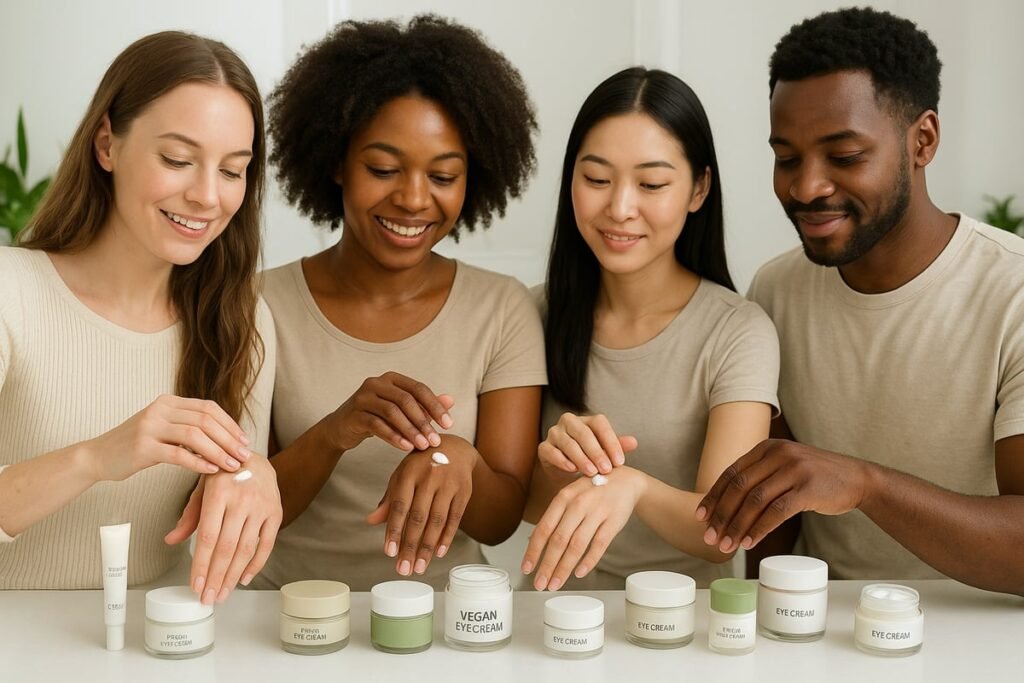
Patch test as always. Apply a tiny bit to the inside of your arm or behind your ear, wait 24 hours and see what happens.
For Normal Skin
Lucky you, keep it simple with a gentle cleanser, a good moisturiser and daily sunscreen. Your job is to maintain, not fix.
A Simple Vegan Skincare Routine for Beginners
You don’t need ten steps. Honestly, most people don’t. Start here:
Morning
- Gentle cleanser
- Serum with vitamin C or niacinamide
- Moisturiser
- Sunscreen, every day, even when it’s cloudy
Evening
- Cleanser
- Treatment or serum suited to your concern
- Night moisturiser
That’s it. Add one new product at a time and give it a couple of weeks before judging it. If you introduce five things at once and your skin reacts, you’ll never know which one caused it.
Common Mistakes When Switching to Vegan Skincare
Throwing everything out at once. It’s wasteful and expensive. Finish what you have, then swap each product for a vegan one as it runs out.
Trusting nature on the front of the bottle. It isn’t a regulated promise. Flip it over and read the ingredients instead.
Expecting overnight results. Skin takes around four weeks to renew itself, so give any new routine a fair chance.
Ignoring your skin type. A trendy product isn’t a good product if it doesn’t suit you.
Skipping sunscreen. Even the most ethical serum can’t undo daily sun damage. And yes, vegan sunscreens exist.
Tips for Shopping Smarter
- Look for well-known vegan and cruelty-free certifications on the packaging
- Look at the entire ingredients list, not just what’s on the marketing on the front
- Make sure ingredients such as squalane, glycerin, and vitamin D3 are plant-sourced so check the sourcing of the ingredients mentioned, as they can be derived from either source
- Purchas[e] the sipper sizes first so you can test before you commit
- Don’t be fooled by the price. Some inexpensive items actually trump the expensive versions.
Final Thoughts
You don’t need to completely revamp your skincare routine when switching to vegan products, no big deal. Begin at a slow pace. Change a product when you finish using it. Read a couple of labels. Find out what your skin really wants.
Soon you’ll have a routine that cares for your skin, honors your beliefs and doesn’t make you wonder what’s in the bottle. That’s a pretty good place to be.
Frequently Asked Questions
Are vegan skin care products more costly?
Not always. There are vegan products at all price points, including drugstore and high-end brands. It has more to do with the brand and formula than the label itself being vegan.
Are vegan skincare products safe for sensitive skin?
Many are, but not all. Because plant extracts and essential oils can irritate, always patch test and choose fragrance-free formulas if your skin reacts easily.
Is vegan skincare the same as organic skincare?
No. Organic refers to how ingredients are grown, while vegan refers to whether animal-derived ingredients are used. A product can be one, both or neither.
How long does it take to see results?
Upgrades to hydration can be visible in few days. Issues such as dark spots or texture, or fine lines may take four to 12 weeks of use.
Do vegan products expire faster?
Certain natural-based products without harsh preservatives might not last as long so check the expiry symbol on the pack and keep the products away from heat and sunlight.”