
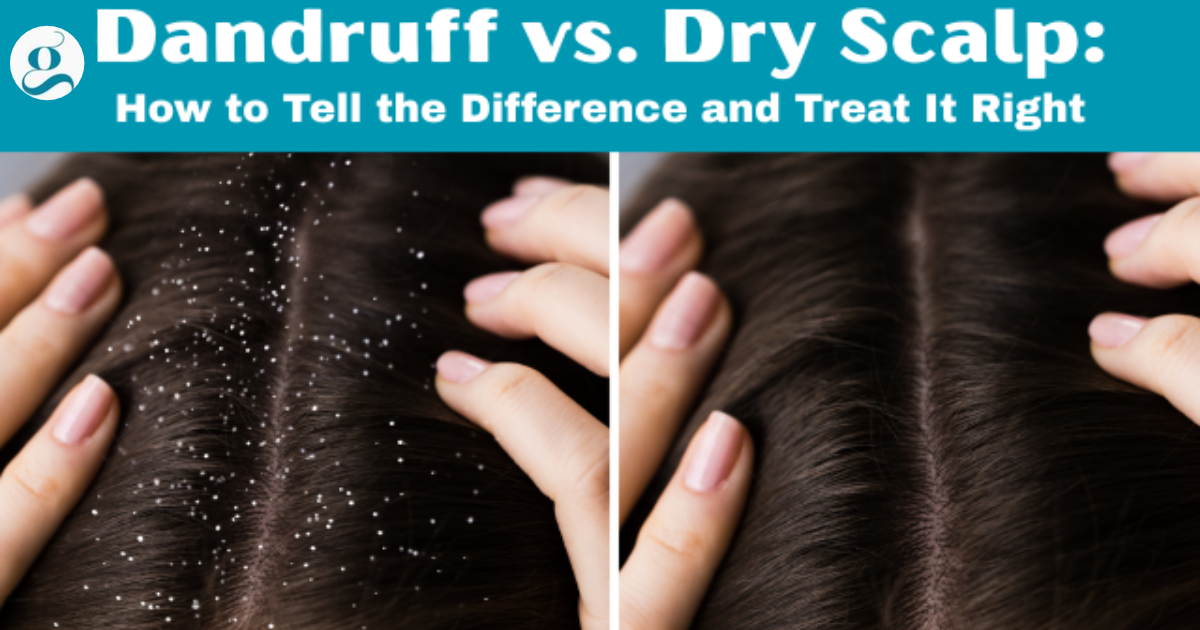
You’re wearing your favorite dark shirt, you glance in the mirror, and there they are. White flakes on your shoulders.
Your first thought is probably dandruff.But here’s the thing: a dry scalp looks almost the same, and treating the wrong one can leave you scratching for weeks. The two problems have different causes, so they need different fixes.
Dry Scalp vs Dandruff: What’s the Actual Difference?
Both cause flakes and itching, which is why people mix them up. The difference is why the flaking happens.
A dry scalp happens when your skin loses moisture. It feels tight, a little rough, and itchy. The flakes are usually small and dry, much like the skin on your hands in winter.
Dandruff is different. It’s linked to oil on the scalp and a natural yeast called Malassezia that lives on everyone’s skin. For some people, the scalp reacts to this yeast with irritation, and skin cells shed faster than normal. The flakes tend to be bigger, and they can look yellowish or feel greasy.
| Dry Scalp | Dandruff | |
| Main cause | Lack of moisture or irritation | Scalp reaction to yeast and oil |
| Flakes | Small, white, dry | Larger, can be oily or yellowish |
| Scalp feels | Tight, dry, itchy | Itchy, often oily |
| Gets worse | In cold, dry weather | Can flare up any time, often with stress |
| Best approach | Gentle care and moisture | Anti-dandruff shampoo |
A quick self check: Does the skin on your arms and hands feel dry too? If yes, a dry scalp is more likely. Does your scalp get oily quickly and the flakes look thick? That points toward dandruff.
Keep in mind, this is a guide, not a diagnosis. Sometimes it’s hard to tell, and that’s okay.
What Causes a Dry Scalp?
Your scalp has a natural moisture balance. A dry scalp usually means something has knocked it off. The usual suspects:
- Cold or dry air. Winter and air conditioning both pull moisture from your skin.
- Very hot showers. Hot water strips away your scalp’s natural oils.
- Harsh shampoos. Some leave your scalp squeaky clean, and also tight and irritated.
- Washing too often. For some people, daily washing makes dryness worse.
- Strongly scented products. Fragrance is a common cause of irritation.
If your scalp feels tight right after you wash, your shampoo is the first thing to look at.
What Causes Dandruff?
Dandruff isn’t about being dirty. This is the biggest myth, and it makes people feel embarrassed for no reason.
It mostly comes down to three things working together: natural scalp oil, the Malassezia yeast, and how sensitive your skin is to it. Because of this, dandruff often comes and goes. Many people notice it gets worse in certain seasons or during stressful weeks.
The good news is that it’s very manageable. The honest news is that it’s usually something you control, not something that disappears forever.
How to Treat a Dry Scalp
The goal here is simple: calm the irritation and help your scalp hold on to moisture.
Your hair’s porosity can affect how it responds to conditioning products. If you have high-porosity hair, read our guide to high porosity hair care for more tips on choosing suitable hair products.
1. Switch to a gentle shampoo. Pick a mild, fragrance-light formula. If your current shampoo causes tightness, burning, or more itching, that’s your sign to change it. A simple product usually beats one with a mile-long ingredient list.
2. Wash with lukewarm water. Hot water feels great but dries you out. Rinse well too, because leftover shampoo can irritate the scalp.
3. Don’t overwash. If daily washing leaves your scalp uncomfortable, try every second day and see how it feels.
4. Skip harsh scrubs. Scrubbing a dry, irritated scalp makes things worse. Be gentle while it heals.
5. Go slow with oils. Some people find a light oil soothing, but for others it causes more irritation or buildup. If your flaking increases, stop using it.
6. Change one thing at a time. If you swap five products at once, you’ll never know which one helped, or which one hurt.

How to Treat Dandruff
If you have constant flaking with itching, a regular shampoo won’t be enough. You need an anti-dandruff shampoo with an active ingredient. Look for one of these on the label:
- Ketoconazole: helps control the yeast linked to dandruff.
- Selenium sulfide: slows down excess skin shedding.
- Zinc pyrithione: a common ingredient that reduces flaking and itching.
Availability and strength differ from country to country, so check with a local pharmacist if you’re unsure what to buy.
How to use it properly:
- Massage it into your scalp, not just your hair.
- Leave it on for the time the label says, often a few minutes, before rinsing. Rinsing instantly is the most common mistake.
- Using more shampoo doesn’t mean better results. It usually just means more irritation.
- Give it time. It can take several washes to see a real difference.
If one ingredient doesn’t work after a few weeks, a different one might suit you better. Also, try not to scratch hard. It damages the skin and keeps the cycle going.
When Should You See a Dermatologist?
Home care solves most cases. But book an appointment if:
- The flakes and itching don’t improve after consistent treatment
- Your scalp is very red, painful, or has sores
- You notice thick, scaly patches
- You’re losing hair in patches
- The problem keeps coming back or getting worse
Conditions like seborrheic dermatitis, psoriasis, and eczema can also cause scaly skin on the scalp, and they need proper treatment. Getting the right diagnosis early saves you from using products that make it worse.
Frequently Asked Questions
Can a dry scalp turn into dandruff?
Not exactly. They’re two separate problems, even though they look alike. You can, however, have both at the same time, which is why some people don’t improve with just one treatment.
Should I wash my hair more to get rid of flakes?
It depends on the cause. With dandruff, a proper anti-dandruff shampoo works better than simply washing more. With a dry scalp, washing too often can backfire.
Is dandruff contagious?
No. You can’t catch it from someone else, and you can’t pass it on.
How long does it take to see results?
For dry scalp, a few weeks of gentler care usually shows a change. For dandruff, expect a couple of weeks of regular use.
Final Thoughts
Flakes are annoying, but they’re also a clue. Small, dry flakes with a tight scalp usually mean dryness, so be gentle and keep your scalp moisturized. Bigger, oily flakes with itching usually point to dandruff, so use the right active ingredient and stay consistent.
Start simple, change one thing at a time, and give your scalp a few weeks. If nothing improves, a dermatologist can quickly tell you what’s really going on.
Exploring other hair care options? Read our guide to Silk Therapy Hair Treatment to learn how it works and who may benefit from it. Keep in mind that cosmetic hair treatments do not replace treatment for dandruff or other scalp conditions.