Acne scars fade slowly. Some marks linger for months. Others seem stuck forever. If you’ve tried creams and serums with little luck, a vitamin C toner might be the missing step in your routine.
This guide breaks it all down. What vitamin C actually does for scars. Why a toner can help. And what to look for before you buy.
Does Vitamin C Really Help Acne Scars?
Let’s get one thing straight from the outset. Vitamin C doesn’t get rid of boxcar scars. It will not fill in pits or smooth out raised tissue.But the majority of scars left by acne aren’t that kind of scar at all.
They’re really just flat, dark marks that are left behind after a breakout has healed. These are known as post-inflammatory hyperpigmentation, or PIH for short. Your skin produces more pigment while healing and that pigment remains.
This is exactly where vitamin C shines. It inhibits the enzyme your skin uses to produce pigment. Eventually this will not only slow any new discoloration but will also fade the spots you already have.
Vitamin C also promotes the synthesis of collagen. This won’t bring a true pitted scar back. But it can make skin appear smoother and healthier as it mends.”
In short:
- Flat dark or red marks → vitamin C helps a lot
- Shallow texture changes → vitamin C helps a little
- Deep pitted or raised scars → vitamin C won’t do much on its own

Why Choose a Toner Over a Serum?
Serums usually get all the attention. So why consider a toner?
1. Toners are gentler. Most vitamin C toners use lower concentrations than serums. This makes them easier on sensitive, acne-prone skin.
2. Toners prep your skin. Applied right after cleansing, a toner helps rebalance your skin’s pH. This makes the products you layer next work better.
3. Toners are lightweight. They absorb fast and won’t feel heavy under makeup or sunscreen.
4. Toners are a low-risk starting point. New to vitamin C? A toner is a gentle way to introduce it before jumping to a stronger serum.
That said, toners are usually milder than serums. If your skin already tolerates activities well, you may want a toner and a serum together, not one instead of the other.
What to Look for in a Vitamin C Toner
Not all vitamin C toners are created equal. Here’s what actually matters.
1. The Type of Vitamin C
Among the various forms of vitamin C, L-ascorbic acid (AA) is the best studied and pure form of vitamin C. It’s effective, but it can be drying or irritating for those with sensitive or acne-prone skin.
Hardcore but gentle alternatives include:
- Sodium Ascorbyl Phosphate(SAP) Calm & Stable Vitamin C
- Magnesium Ascorbyl Phosphate (MAP) moisturizing, non-irritating form of vitamin C
- Ascorbyl Glucoside (AG) Is A Mild and Slow-Releasing Form of Vitamin C
If your skin is very reactive, use a derivative form, not pure l-ascorbic acid.
2. Supporting Ingredients
Vitamin C works better with backup. Look for toners that also contain:
- Niacinamide blocks pigment transfer through a different pathway
- Hyaluronic Acid keeps skin hydrated while actives do their job
- Green Tea or Licorice Root calms redness and adds extra brightening power
3. No Signs of Oxidation
Vitamin C breaks down when exposed to light and air. If a toner looks yellow, orange, or brownish, it’s already lost potency. Fresh formulas are usually clear or very lightly tinted, and come in dark, opaque bottles.
4. Alcohol Free Formulas
Skip toners with high alcohol content. They can dry out acne-prone skin and cause more irritation than benefit.
Popular Vitamin C Toner Picks Worth Knowing
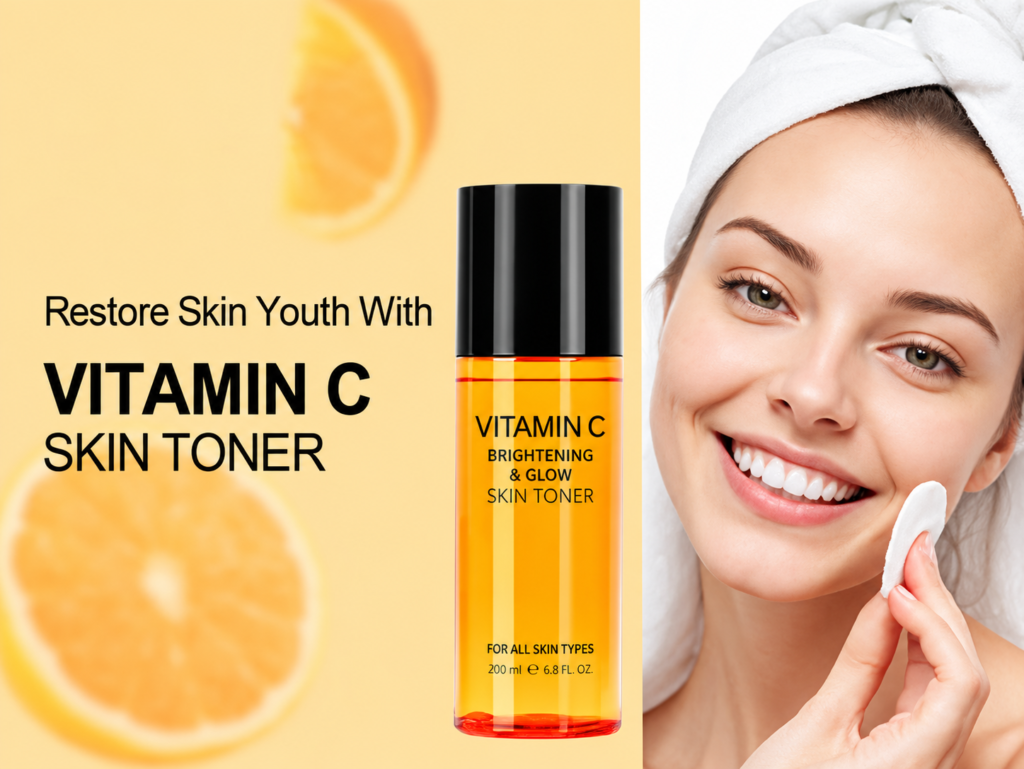
While vitamin C serums dominate most “best of” lists, a handful of toners have built a strong reputation for pairing brightening ingredients with a lightweight, calming base. Look for options built around SAP or ascorbyl glucoside, paired with niacinamide and hyaluronic acid this combination shows up repeatedly in well-reviewed formulas, including brightening toners like Skinever’s Vitamin C option, which blends vitamin C with niacinamide and hyaluronic acid in an alcohol-free base.
When comparing toners, check the ingredient list yourself. The exact position of vitamin C on the label (closer to the top means a higher concentration) tells you more than marketing claims ever will.
How to Use a Vitamin C Toner the Right Way
Getting results depends on using it correctly, not just buying the right bottle.
- Cleanse your face and pat it dry.
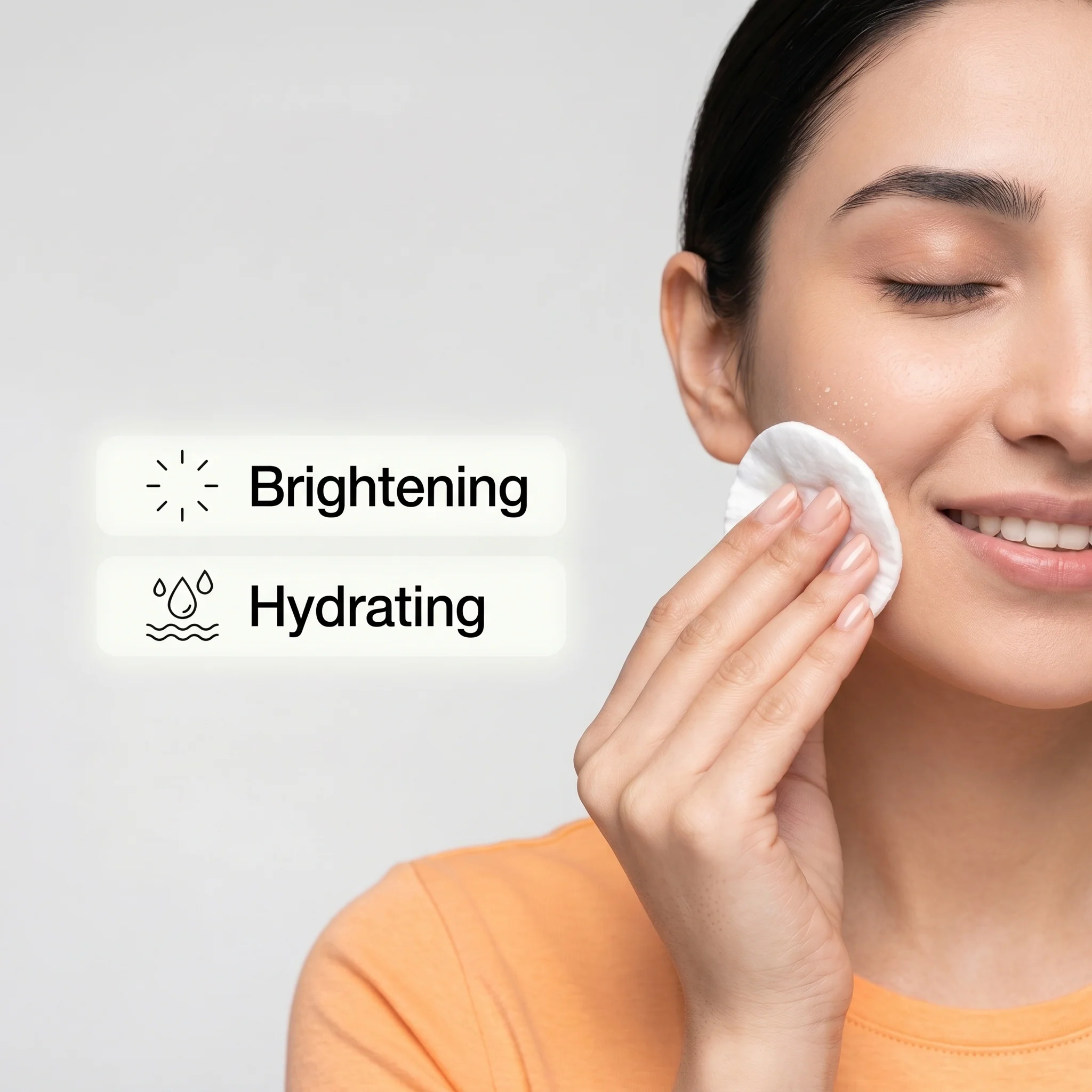
- Apply the toner with a cotton pad or clean hands, sweeping it gently over your face.
- Wait about 30–60 seconds to let it absorb.
- Follow with your serum or moisturizer.
- Finish with SPF 30 or higher every morning, without exception.
Use it once daily at first, ideally in the morning. This pairs naturally with sunscreen, which boosts the antioxidant protection vitamin C provides.
How Long Until You See Results?
Patience matters here. Your skin renews itself roughly every 28 days, so change takes time.
| Timeframe | What to Expect |
| Weeks 1–2 | Skin adjusting, no visible change yet |
| Weeks 3–4 | Slight brightening begins |
| Weeks 5–8 | Lighter marks start fading noticeably |
| Weeks 9–12 | Most PIH visibly reduced |
| 3+ months | Continued fading with consistent use |
Skipping days, skipping sunscreen, or picking at healing breakouts will all slow this process down.
Tips to Speed Up Results
- Wear SPF daily. Without it, sun exposure creates new pigment faster than vitamin C can fade old marks.
- Pair with niacinamide. Together, they target pigment through two different pathways.
- Don’t pick at breakouts. Each pick resets the healing clock and risks a new mark.
- Store your toner properly. Keep it away from direct sunlight and heat to protect its potency.
- Stay consistent. Daily use matters far more than product price.
When Should You See a Dermatologist?
A vitamin C toner works well for flat, discolored marks. But if your scars are indented, raised, or painful, that’s a sign to see a professional.
A dermatologist can recommend treatments like microneedling, chemical peels, or laser resurfacing for deeper structural scars that topical products alone can’t fix.
Final Thoughts
A vitamin C toner is not going to do wonders the next day. But when used regularly with SPF and the appropriate supporting ingredients, it’s a mild yet effective way to lighten acne scars over time.
Start simple. Opt for a stable, alcohol-free formulation. Stay consistent. And give your skin the time it needs to make a real change.
Frequently Asked Questions
Can a vitamin C toner really help fade acne scars?
It will lighten flat, dark spots called post-inflammatory hyperpigmentation. It won’t repair deep or raised scars.
Is a vitamin c toner better than a serum for acne scars?
Not necessarily better, just kinder. Serums are more concentrated. Toners are a lighter option, especially for sensitive or acne-prone skin.
How long does it take to see the effect of a vitamin C toner?
Early brightening results are visible for most within 3–4 weeks, with more noticeable results by 8–12 weeks of daily use.
Can vitamin C toner and niacinamide be used at the same time?
Yes This is a very fine combination and many people use it morning and night without any irritation.
When should I apply vinoperfect vitamin c toner?
Late afternoon or evening but morning is OK too, as it works well with sunscreen and provides additional sun protection for preventing sun-induced pigmentation.
Can I Use Vitamin C for Sensitive Skin?
Absolutely, if you opt for a mild derivative such as SAP or ascorbyl glucoside rather than pure vitamin C at a very high concentration.