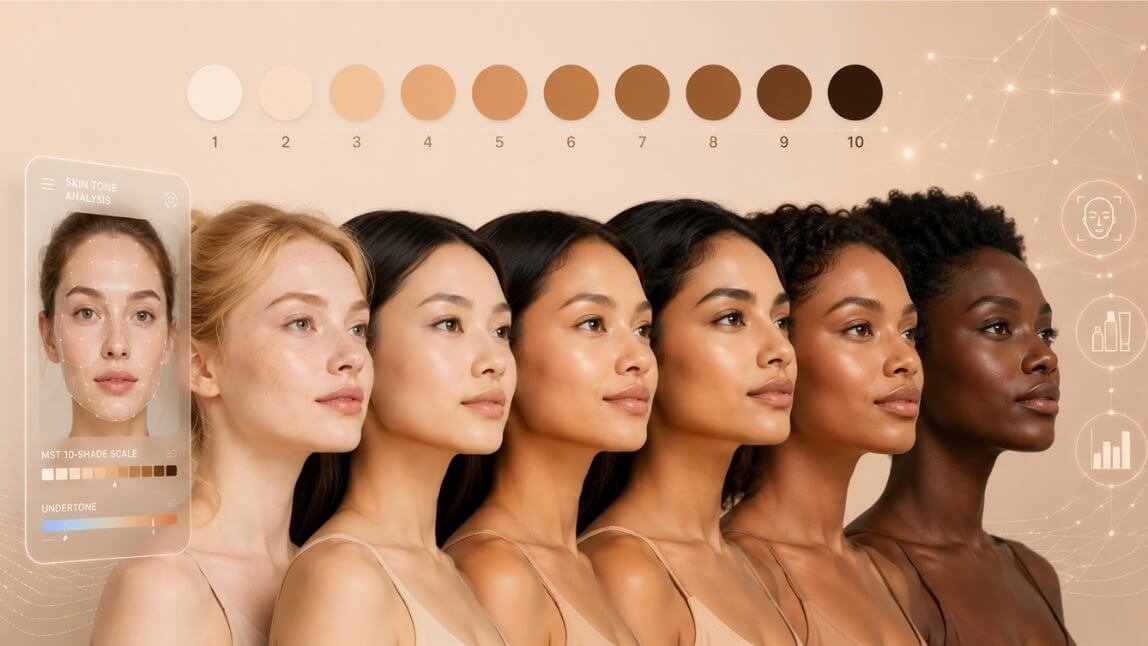
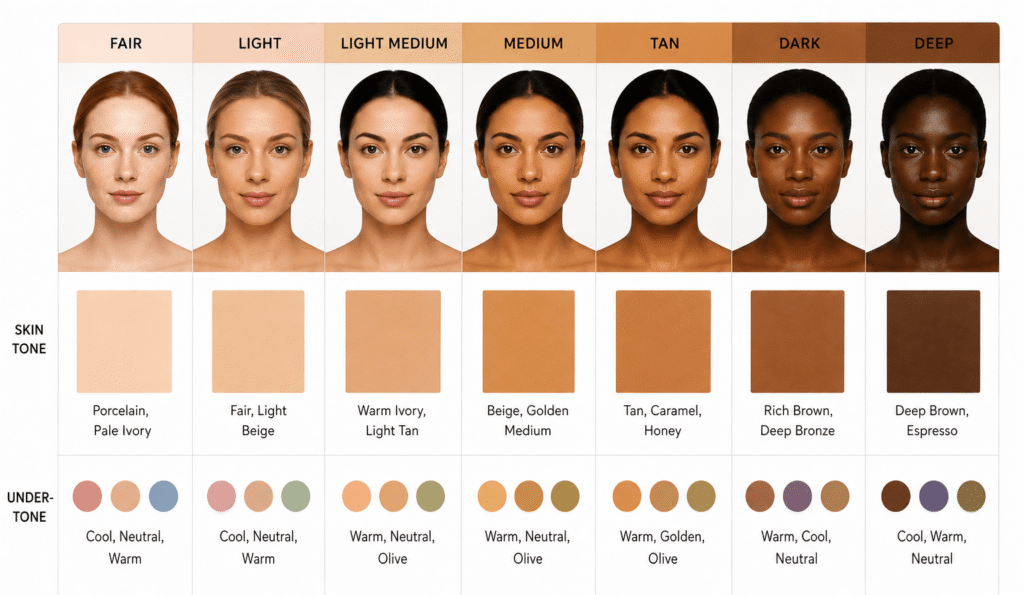
A skin tone chart may look like just a simple row of color swatches, but it has a much larger impact behind the scenes determining how foundation shades are created, how AI beauty tools are trained, and how diverse a brand’s product offering is.
Whether you’re a consumer on the hunt for your ideal shade, or a beauty brand developing a shade-matching system, knowing how skin tone charts work (and which taxonomy to trust) is more important than ever in 2026.
In this guide, you’ll learn about the popular skin tone classification systems, the difference between tone and undertone, and how AI is changing the way skin tone is quantified.
What Is a Skin Tone Chart?
Skin Tone Chart A structured reference system that defines human skin color from the lightest to the deepest shades, often with undertone categories such as warm, cool, or neutral. For the average consumer, a skin tone chart is designed to help them find the right foundation shade for their skin.
In the past, shoppers determined their foundation shade by closely examining swatches under the notoriously unflattering lights of department stores. Today, AI powered tools can analyze a face and recommend the perfect shade in seconds, removing the guesswork from a process that once felt hit-or-miss.
Two main classification systems are used, the classic Fitzpatrick Scale and the newer Monk Skin Tone Scale, but they were developed for very different purposes.
The Fitzpatrick Scale: The Original Standard
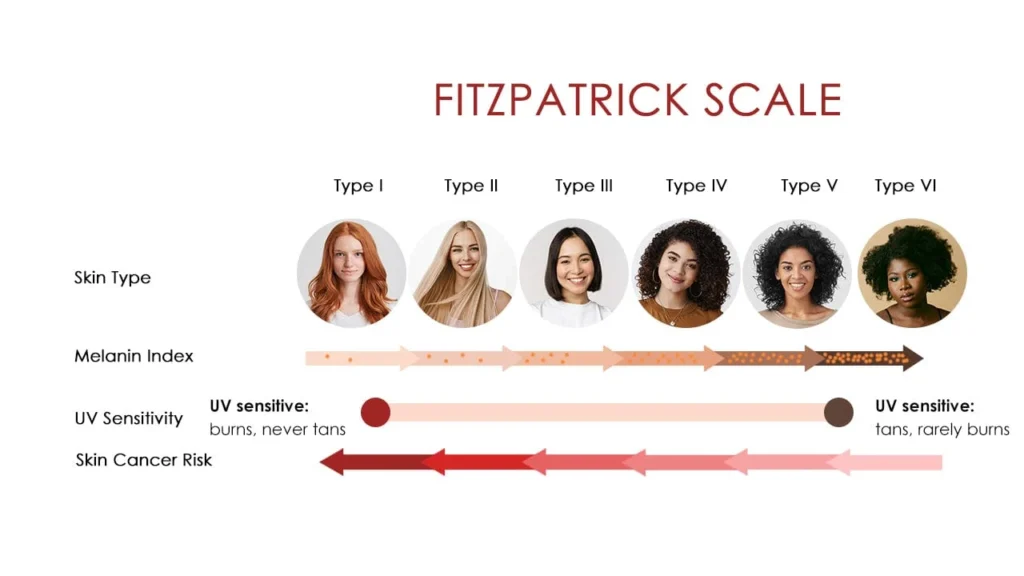
The Fitzpatrick Scale, created by dermatologist Thomas B. Fitzpatrick, has been in use since 1975. It doesn’t measure skin tone variety; it was developed to foresee how skin responds to UV radiation. That distinction matters, because it explains some of the scale’s well-documented limitations today.
The scale sorts skin into six phototypes:
| Type | General Description | How It Reacts to Sun |
| I | Very fair, often freckled | Burns easily, never tans |
| II | Fair, light beige | Burns easily, tans minimally |
| III | Medium tone | Tans gradually |
| IV | Olive to light brown | Tans easily, rarely burns |
| V | Brown to dark brown | Rarely burns |
| VI | Deep brown to black | Almost never burns |
Dermatologists and clinicians still widely use the Fitzpatrick scale as a reference standard for sunscreen recommendations and skin-related research. However, the scale has historical limitations. Researchers originally developed it around lighter skin tones and added darker skin tones later, almost as an afterthought.
That creates a real gap: a huge portion of the global population ends up lumped into just two broad categories, which isn’t nearly precise enough for modern product matching or AI training.
The Monk Skin Tone Scale: Built for the AI Era
In 2022, Google partnered with Harvard sociologist Dr. Ellis Monk to release a new skin tone classification system designed specifically to fix what Fitzpatrick got wrong. The Monk Skin Tone (MST) Scale offers a more balanced, inclusive way to measure skin tone and it was purpose-built with AI training in mind.
What sets it apart:
- Ten shades instead of six, offering far more precision especially across darker skin tones that Fitzpatrick compresses into just two categories.
- No link to UV sensitivity or race, it measures visible pigmentation only, keeping the scale focused strictly on skin tone itself.
- Backed by real research it’s been validated across tens of thousands of images under a range of lighting conditions, and it’s now used by organizations including the NIH and integrated into Google’s own AI products.
- Free to use released under an open license, so any brand or research team can adopt it without licensing costs.
Peer-reviewed dermatology research has found that the Monk scale lines up more closely with objective color-measurement tools than Fitzpatrick does, particularly for deeper skin tones. For any brand building AI-powered beauty tools, that’s not a minor detail; it directly affects how well a model performs for a large share of its customer base.
Other Classification Systems Worth Knowing
A few other systems exist but see limited commercial use. The Von Luschan chromatic scale and clinical tools like PERLA offer extremely granular skin color measurement, but their complexity makes them impractical for most beauty brands to use at scale. In practice, most companies in 2026 rely on Fitzpatrick for clinical and regulatory needs, and Monk for AI development and inclusive product design.
Skin Tone vs. Undertone Why the Difference Matters
A skin tone chart tells you how light or deep a complexion appears. Undertone is different: it’s the subtle hue sitting beneath the surface, and it often matters more than surface tone when it comes to choosing a flattering foundation, concealer, or color palette.
There are three general undertone categories:
- Cool pink, red, or blue-toned undertones. Silver jewelry tends to complement cool undertones, and veins often appear blue or purple.
- Warm golden, peachy, or yellow undertones. Gold jewelry tends to look better against warm undertones, and veins often appear more green.
- Neutral/Olive a blend of warm and cool, sometimes with a greenish or grayish cast that doesn’t fit cleanly into either category.
Classic DIY undertone tests checking your veins, trying on gold versus silver jewelry, holding up white paper can be a helpful starting point, but they’re far from foolproof. Lighting, skin conditions, and naturally ambiguous undertones can all throw off the results.
This is exactly where AI-based undertone detection has an edge: by analyzing far more color data points than the human eye can reliably judge, it produces more consistent results.
How AI Is Changing the Skin Tone Chart
Static skin tone charts have one major drawback: they are based on self-reporting. People have to try and guess which skin tone swatch is closest to their own in potentially unflattering lighting, which is a huge part of why foundation shade mismatches are still one of the most frequent (and expensive) return drivers in the beauty industry.
AI-powered skin tone detection solves this differently. Using nothing more than a smartphone camera, modern systems can:
- Identify a skin tone’s position on the Fitzpatrick or Monk scale in a matter of seconds
- Detect undertone with more consistency than manual methods
- Match detected tones to specific product shades across a brand’s catalog
- Account for tone variation across different areas of the face
- Maintain accuracy across a wide range of skin tones, ages, and lighting conditions
The impact on business metrics is real brands that have implemented AI shade-matching tools have reported significant jumps in customer engagement simply by removing the friction of manual shade selection.
What This Looks Like for a Customer
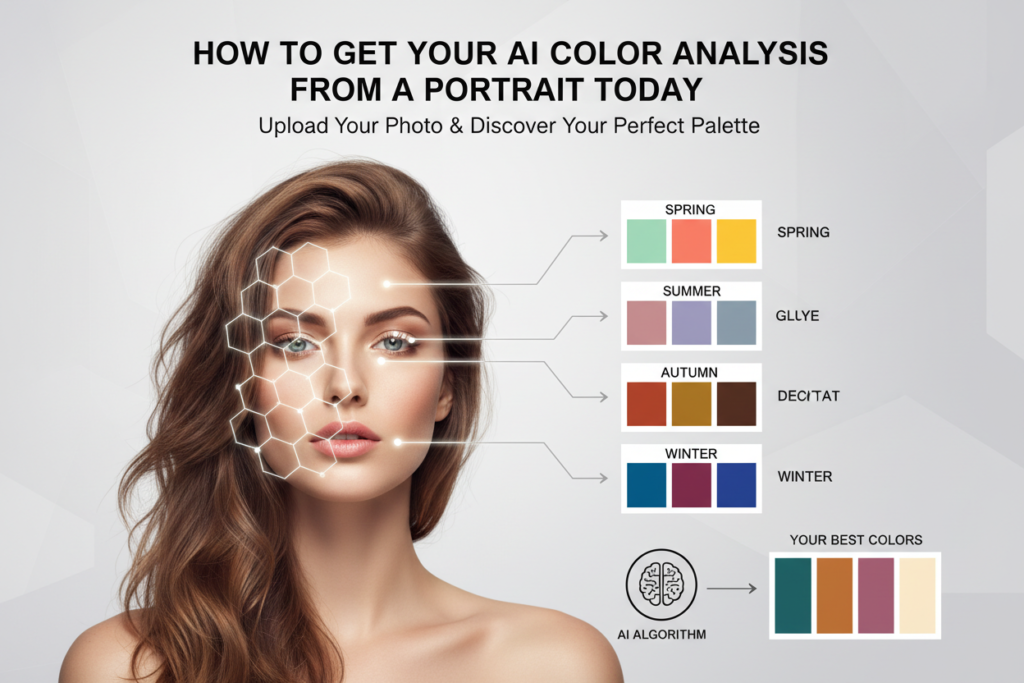
In practice, it’s straightforward: a customer opens an app or website, taps a find my shade button, and lets their camera scan their face. Within seconds, the tool identifies their skin tone and undertone and recommends the closest-matching products often paired with a virtual try-on feature so they can preview the shade before buying. No chart-squinting, no guesswork, and far fewer returns.
Why Inclusive Skin Tone Charts Are a Business Priority, Not Just an Ethics Issue
The beauty industry has long focused its shade offerings on lighter skin tones. Today, many businesses increasingly view this gap as a missed revenue opportunity rather than solely a social justice issue.
Those who have made a real effort to genuinely cater for those with deeper skin tones by increasing the number of shades in their ranges have seen true, quantifiable market growth.
In the case of AI-powered tools, inclusivity begins with training data. A model that is predominantly trained on lighter skin tones will underperform for users with darker complexions resulting in misleading suggestions, more returns, and tangibly harming brand reputation.
This is a huge reason why the Monk Skin Tone Scale has been so successful: it enables AI to have the granularity to make accurate distinctions across the full spectrum of human skin tones, not just the lighter end of the spectrum.
Skin Tone Charts Around the World
Skin tone distribution isn’t uniform across global markets, and neither are consumer expectations. A classification system calibrated mainly around Western populations won’t necessarily hold up well in South Asian, East Asian, African, or Latin American markets.
Brands expanding internationally need AI models trained on data that actually reflects the markets they’re entering, not a system built decades ago around a narrow slice of the population.
Building a Skin Tone Strategy for Your Brand
For beauty and skincare brands looking to implement skin tone technology, the decision generally comes down to three parts:
1. Choose the Right Classification System
Most brands don’t need to pick just one. Fitzpatrick still matters for clinical or regulatory contexts things like SPF guidance or dermatology referrals. Monk is generally the better fit for AI training and inclusive shade matching. They serve different purposes, so using both often makes the most sense.
2. Prioritize Diverse Training Data
An AI tool is only as good as the data behind it. Systems trained on limited or skewed datasets will underperform for a meaningful share of users. When evaluating an AI skin tone provider, ask about dataset size, diversity, and how accuracy is validated across different skin tones.
3. Connect Skin Tone Data to the Rest of Your Stack
A single skin tone scan can generate more value than just a one-time product recommendation. That data can inform personalization, inventory decisions, and long-term customer retention strategies but only if it’s actually connected to your CRM, recommendation engine, and broader systems instead of being treated as a one-off feature.
Where Skin Tone Charts Are Used Beyond Foundation
Skin tone classification isn’t limited to foundation matching. It shows up across several parts of the beauty and skincare world:
- Foundation and concealer matching pairing tone and undertone to the closest product shade
- SPF recommendations using skin type to guide sunscreen strength and formula
- Skincare personalization tailoring product suggestions based on pigmentation-related needs
- Pre-treatment consultations informing safety protocols for treatments like laser or chemical peels
- Hair color guidance using undertone to suggest complementary hair shades
- Lip and blush matching guiding color family selection based on tone and undertone
Final Thoughts
A skin tone chart is now more than a color guide; it’s integral to the way beauty brands create inclusive products, train precise AI tools, and assist shoppers in finding the right shade without the traditional trial-and-error. As categorization schemes such as the Monk Skin Tone Scale popularize, expect skin tone charts to become increasingly granular, inclusive and powered by AI rather than just static swatches.
Frequently Asked Questions
What are the basic categories on a skin tone chart?
Most consumer-facing skin tone charts use four broad categories: fair, light, medium, and deep. These map loosely onto the Fitzpatrick scale, though more advanced systems like the Monk scale break things down into far more precise shade categories for better accuracy.
What is the Fitzpatrick Scale used for?
Originally created to guide UV light therapy dosing, the Fitzpatrick Scale is now commonly used for sunscreen recommendations, dermatology research, and as a baseline reference in some AI skin tone systems though it’s often criticized for lacking precision across darker skin tones.
What is the Monk Skin Tone Scale?
It’s a 10-shade, freely licensed skin tone classification system created by Dr. Ellis Monk and released by Google in 2022. It was designed to represent skin tones more equitably than Fitzpatrick and has since been adopted by research institutions and integrated into AI products.
How can I figure out my undertone?
The vein test and the jewelry test are common starting points, but both are sensitive to lighting and open to interpretation. AI-based undertone detection tends to produce more reliable results by analyzing far more data points than the human eye can.
Which skin tone scale do AI beauty tools typically use?
Many platforms support Fitzpatrick for clinical contexts while increasingly relying on the Monk Scale for AI training and inclusive product matching, often combining both systems for maximum accuracy.
Can your skin tone change over time?
Yes surface skin tone can shift with sun exposure, seasons, and certain treatments. Undertone, however, tends to stay fairly stable over a lifetime since it’s determined by deeper melanin patterns rather than surface-level changes.